 English
 Deutsch
 español
 français
 italiano

-
Newest

Light salmon roll
Omelette with cherry tomatoes and cheese
Rice sponge cake
Spaghetti with shrimps in creamy garlic sauce
Cabbage with champignons
Beef Stroganoff with Mushrooms and Cream



Chicken Carpaccio in a Dryer

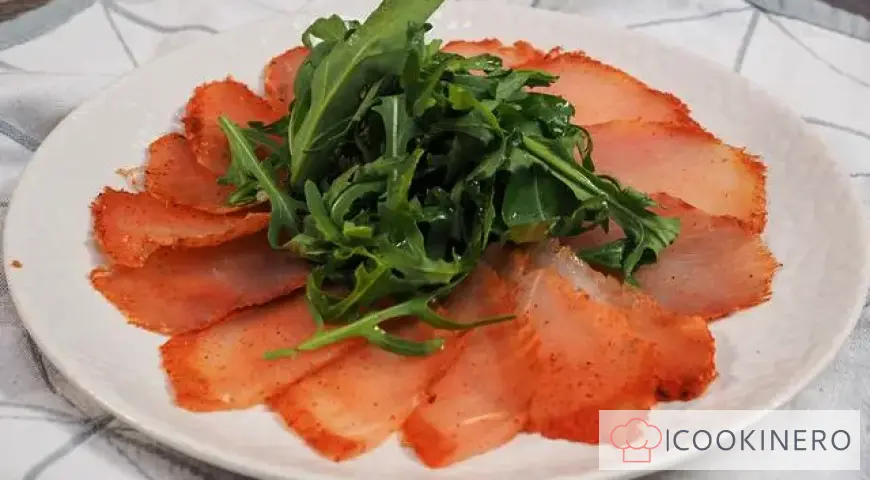
Typically, Italian carpaccio is prepared from meat or seafood without heat treatment. Therefore, this recipe for chicken carpaccio in a dryer is suitable for those who refuse or are wary of eating raw meat. This dish requires special equipment, because the chicken fillet will be cooked in a vegetable dryer. This carpaccio turns out aromatic and is ideal as an exquisite snack not only for beer, but also for wine.
How to cook Chicken Carpaccio in a Dryer
Step 1

Marinate the chicken. Mix salt, chopped garlic and spices in a bowl. Roll the fillet pieces thoroughly in the mixture of salt, garlic and spices. Place the fillet in a separate deep bowl and press the pieces tightly together. Pour soy sauce over the chicken. Place a plate on the meat and put a weight on the plate, for example, a heavy bottle of water. Leave the chicken in the refrigerator for at least 4 hours.
Step 2

Dry the chicken. After the time has passed, remove the chicken from the container and rinse with water. Dry each piece thoroughly with paper towels. The chicken fillet should be dry. Leave the chicken in a dehydrator heated to 65 degrees for 6 hours. When the carpaccio is ready, cut it into very thin slices.
Chicken Carpaccio in a Dryer - FAQ About Ingredients, Baking Time and Storage
Reviews: 0
0 Overall ratingHave you already prepared this recipe? Tell what you think.
Write a review
Trending


Czech style pork knuckle
The recipe for pork knuckle, or as they say in the Czech Republic, "veprova knelna", involves stewing the meat in beer for quite a long time and then baking it in the oven. Czech pork knuckle is juicy and tender baked meat with a unique aro


Funchoza with pork
Funchoza with pork is a Korean dish that is prepared very quickly from glass noodles with meat, vegetables, soy sauce and spices. Funchoza with pork is spicy and aromatic. The noodles become transparent during cooking and absorb not only the taste an

Adyghe cheese at home
Adyghe cheese is soft and tender. Moderately salty, aromatic and dense. You can cook many dishes of Caucasian cuisine with this cheese. You can also make this cheese at home, and do it without much difficulty.

Azerbaijani kutabs
Kutaby (or gutaby) is a traditional Azerbaijani snack, a thin pie with a filling of ground beef or lamb with the addition of lamb fat. Onions, herbs, cheese, and sometimes even pumpkin are also used for the filling of kutaby. Kutaby are fried in a dr