 English
 Deutsch
 español
 français
 italiano

-
Newest

Light salmon roll
Omelette with cherry tomatoes and cheese
Rice sponge cake
Spaghetti with shrimps in creamy garlic sauce
Cabbage with champignons
Beef Stroganoff with Mushrooms and Cream





Vegetable manti


Vegetable manti is an alternative version of a popular dish of Eastern cuisine. It is believed that manti was invented in Uzbekistan. Now this dish is widespread throughout Asia and beyond! The filling in manti is usually meat. In this recipe, the filling consists of vegetable classics: potatoes, cabbage, carrots and onions! It is worth noting that vegetables can be combined and something new can be added to the filling!
How to cook Vegetable manti
Step 1

Break the chicken eggs into a separate bowl and beat them. Add water.
Step 2
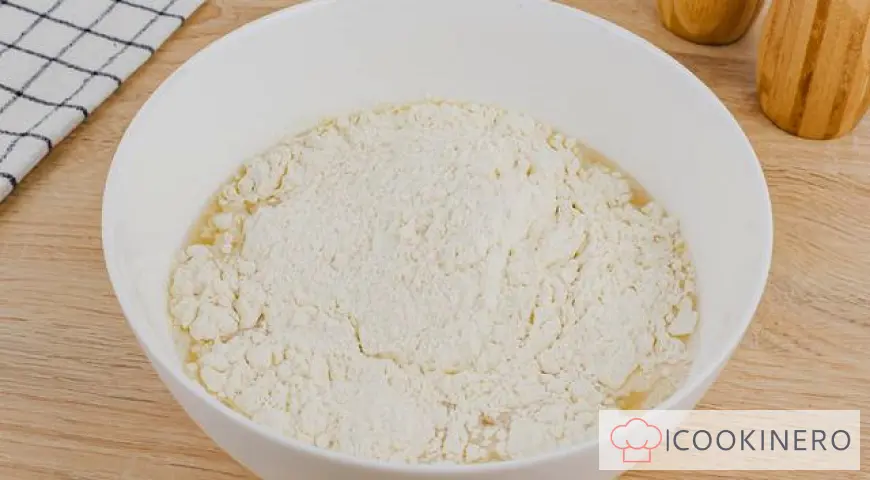
Add flour and salt to a bowl.
Step 3
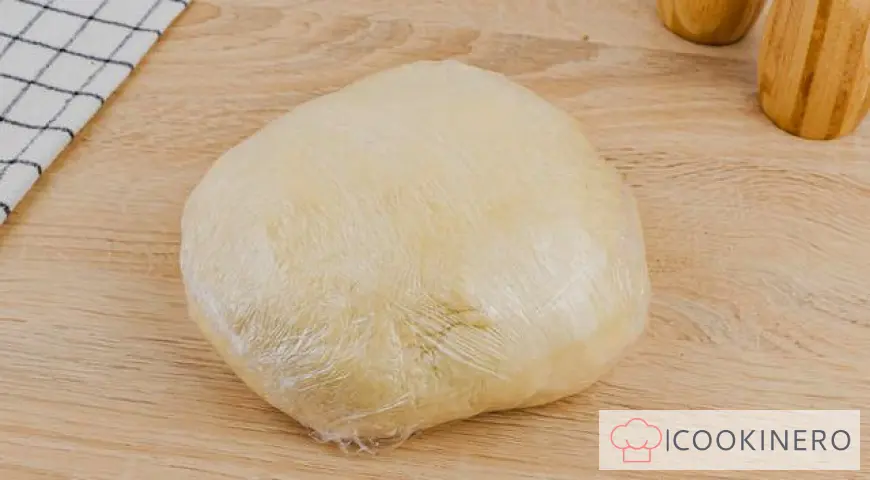
Knead the dough, cover it with cling film and leave for 10 minutes.
Step 4
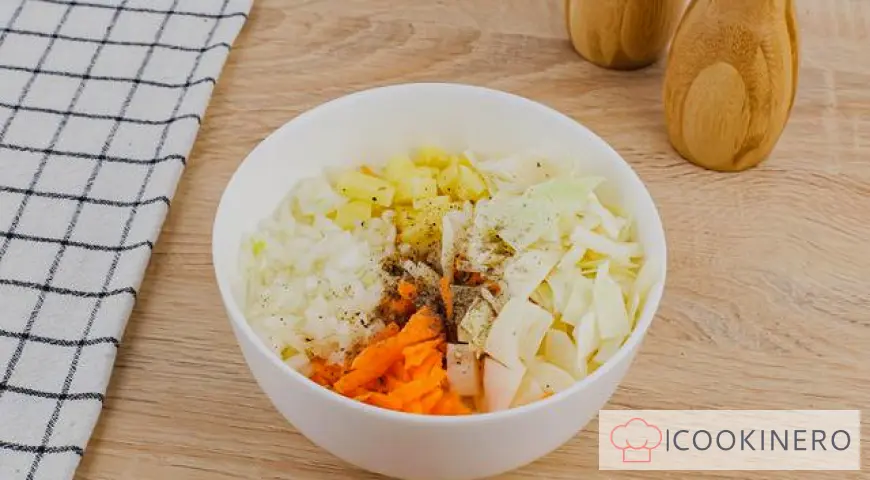
Finely chop the potatoes, carrots, onions and cabbage. Make the filling from the chopped vegetables. Add salt and ground black pepper to taste.
Step 5

Roll out the dough, shape it into a sausage and cut into several pieces. Form balls from the cut pieces of dough.
Step 6

Roll each ball thinly and place the vegetable filling in the center.
Step 7
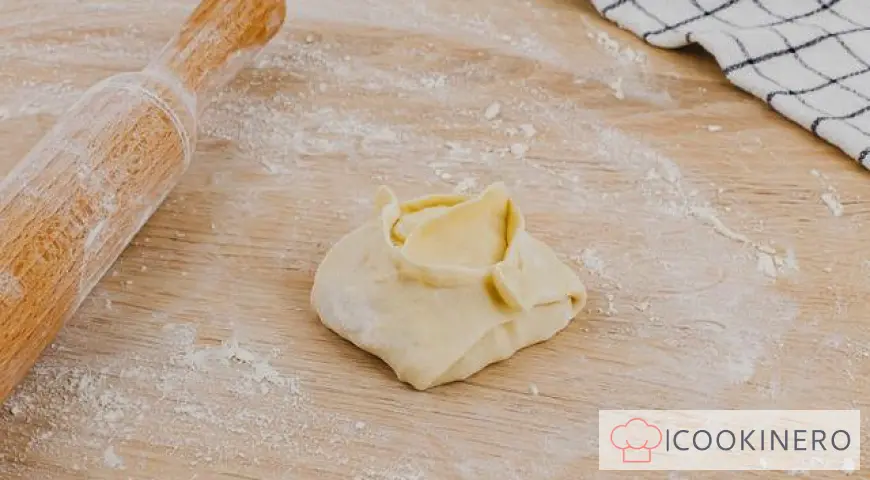
Bring the edges of the dough together to form manti.
Step 8
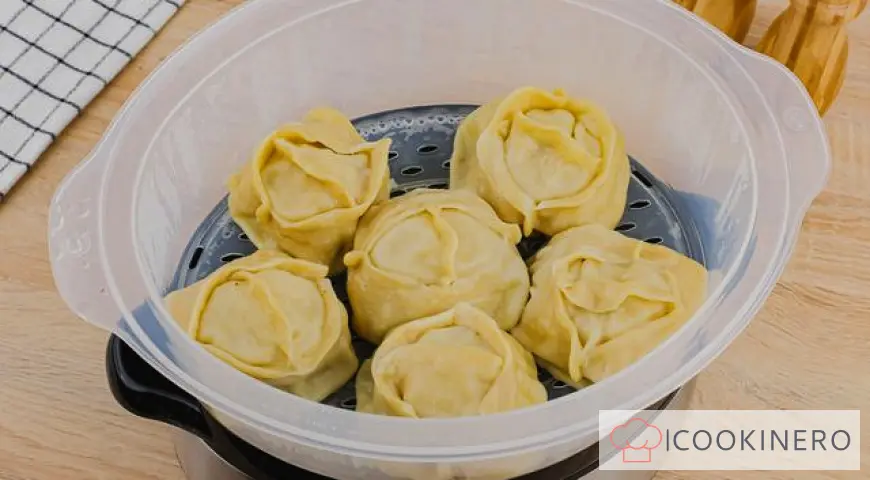
Cook the manti in a mantovarka with the lid closed for 40 minutes. The water should be constantly boiling.
Vegetable manti - FAQ About Ingredients, Baking Time and Storage
Reviews: 0
0 Overall ratingHave you already prepared this recipe? Tell what you think.
Write a review
Trending

Azu in Tatar style
Azu is a Tatar dish that gained popularity in Soviet times. Traditionally, azu is made from lamb or beef, with onions, potatoes and pickles added. Everything is cut into strips and stewed in tomato sauce.


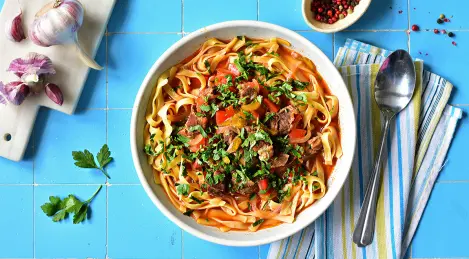


Azerbaijani kutabs
Kutaby (or gutaby) is a traditional Azerbaijani snack, a thin pie with a filling of ground beef or lamb with the addition of lamb fat. Onions, herbs, cheese, and sometimes even pumpkin are also used for the filling of kutaby. Kutaby are fried in a dr

Tashkent Salad with Radish
The recipe for a salad with radish and beef is called "Tashkent". The root vegetable is popular in Uzbekistan. It is used to make a variety of salads, appetizers and even lagman. The Tashkent salad is an excellent option for a simple and he
