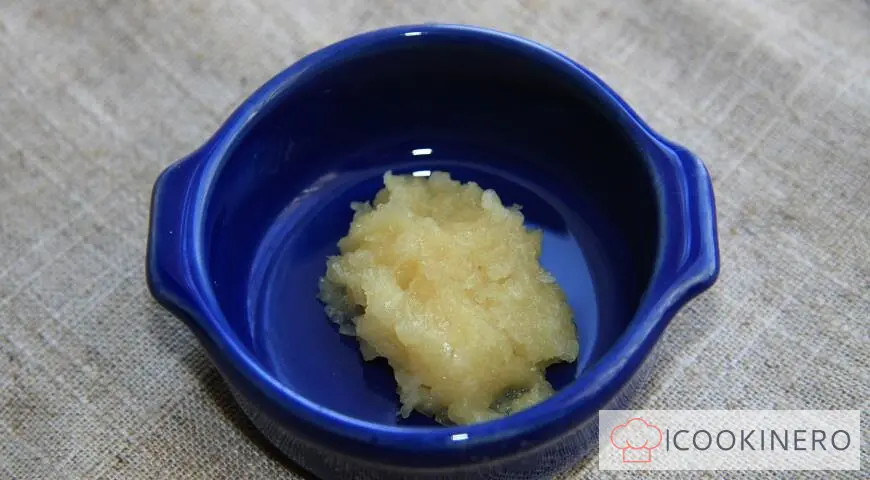

Garlic paste with a knife

Cookinero 31 Dec 2022

Why is it needed at all? Firstly, garlic paste is sometimes required to be added to dishes, or it can be used on its own, for example, spreading on bread. And, secondly, this is a very good way to keep garlic until spring. Mash the garlic into a paste, mix with vegetable oil, seal in a jar and store in the refrigerator until needed. This paste will keep for a very long time. Of course, if you're planning on making a large amount of pasta, it's much faster to chop the garlic in a blender. But if you need to cook a little pasta, literally 1-2 tbsp. l., here the knife will come to the rescue. Moreover, such a paste, with some diligence, turns out to be smooth and uniform.

How to cook Garlic paste with a knife

Step 1

To separate the garlic head into cloves, hit it with the edge of your hand. It will immediately fall apart into individual cloves.

Step 2

Using a small knife, gradually peel off the skin from each clove, starting at the root end. Cut off your own roots. It is convenient to use the so-called silicone tubes for peeling garlic, inside which several cloves are placed and the tube is rolled over the table, thereby cleaning the clove from the skin.

Step 3

Cut the cloves in half and remove the green middle sprout, if any.

Step 4

Garlic paste with a knife

Finely chop the garlic with a chef's knife.

Step 5

Sprinkle garlic generously with salt. In this case, the salt will work as an abrasive and will facilitate the process of rubbing the garlic. I've tried making puree without salt and it's much more difficult.

Step 6

Start rubbing the garlic with the blade of a knife across the surface of the board. The cutting edge of the knife should be turned away from you. Hold the handle with your right hand (it is more convenient when it hangs from the surface of the table, so the blade is pressed more tightly). With your left hand, firmly, with effort, press the blade of the knife against the cutting board and grind the garlic to the desired consistency. Gather the minced garlic into a paste with a knife. Ready.

Garlic paste with a knife - FAQ About Ingredients, Baking Time and Storage

Yes, a garlic press can be used for a finer paste, but the texture and flavor may differ slightly from the traditional knife method. Hand-chopping and grinding with a knife can provide more control over consistency.
Garlic paste can be stored in an airtight container in the refrigerator for up to 1 week. For longer storage, freeze it in small portions for up to 3 months. Adding a thin layer of oil on top can help preserve freshness.
Yes, you can omit the salt or use a small amount of lemon juice or vinegar as an alternative abrasive. The acidity may slightly alter the flavor but helps break down the garlic.
While peeling cloves ensures the best texture, you can use pre-peeled garlic for convenience, though freshness and flavor may vary slightly. Avoid jarred minced garlic, as it lacks the same punch.
Garlic paste is versatile—use it in marinades, salad dressings, soups, or stir-fries. It also works well as a base for sauces, spreads, or to flavor butter for bread.
Yes, freezing garlic paste in ice cube trays or small containers allows easy portioning. Thaw in the fridge before use, or add frozen directly to hot dishes while cooking.
Yes, color changes (often due to natural sulfur compounds reacting with acidity or minerals) are harmless. The flavor remains unaffected, though the vibrant hue may fade when cooked.
For milder flavor, blanch garlic cloves for 30 seconds before processing. For stronger taste, use fresh garlic and avoid overcooking the paste when adding to dishes.

Reviews: 0

0 Overall rating
5
0
4
0
3
0
2
0
1
0

Have you already prepared this recipe? Tell what you think.

Write a review

Will be displayed on the comment.
Your review must be at least 50 characters.

Trending

Korean cold soup Kuksi

This cold soup was invented out of poverty. For the broth, bay broth is used, which is then seasoned with ground tomatoes and garlic, soy sauce and sugar are added. Separately, boil the noodles, wash them in ice water. A large portion of noodles is p

Apricot and gooseberry jam

The combination of sunny apricot and amber gooseberry is already picturesque in itself. Since it is difficult to catch the moment of optimal ripeness of gooseberries, they are often picked while still green and sour. In this case, this is what we nee

Beef knuckle

The special value of the beef knuckle (the lower part of the beef carcass leg) is the marrow bone, rich in nutrients. The recipe recommends using meat from young animals no more than 20 months old. It can be distinguished by the rich red and pink col

Beef shurpa

Shulum, chorpa, shorpo, sorpa... In different countries, shurpa is called by different names, but it looks about the same everywhere: a rich soup with meat and vegetables. Various herbs and spices can be added to it, or it can be made on the basis of

Kharcho with chicken

Usually kharcho is cooked in beef broth. But we decided to break the rules to get a slightly different, but no less tasty dish. Kharcho based on chicken will be more dietary, but in taste it will be the same famous Georgian soup, which you can easily

Salad "Tbilisi"

Tbilisi salad is a popular Georgian salad with beef, red beans, sweet peppers, cilantro and walnuts. It is distinguished by its fresh spicy taste, because chili peppers, garlic and khmeli-suneli spices are added to it. The salad is traditionally dres

Apple marshmallow

Apple marshmallows can be considered a healthy homemade treat. The low-calorie dessert is made by making marshmallows from applesauce. In order for homemade apple marshmallows to hold their shape well, they need to be made with gelatin. According to

Khinkal in Dagestan style

Khinkal is a traditional Caucasian dish. It is often confused with such a famous Georgian dish as khinkali. And, although the set of products in both dishes is quite similar, they are nevertheless different. Traditionally, khinkal is prepared on the

Categories Menu Recipes
Top