 English
 Deutsch
 español
 français
 italiano

-
Newest

Light salmon roll
Omelette with cherry tomatoes and cheese
Rice sponge cake
Spaghetti with shrimps in creamy garlic sauce
Cabbage with champignons
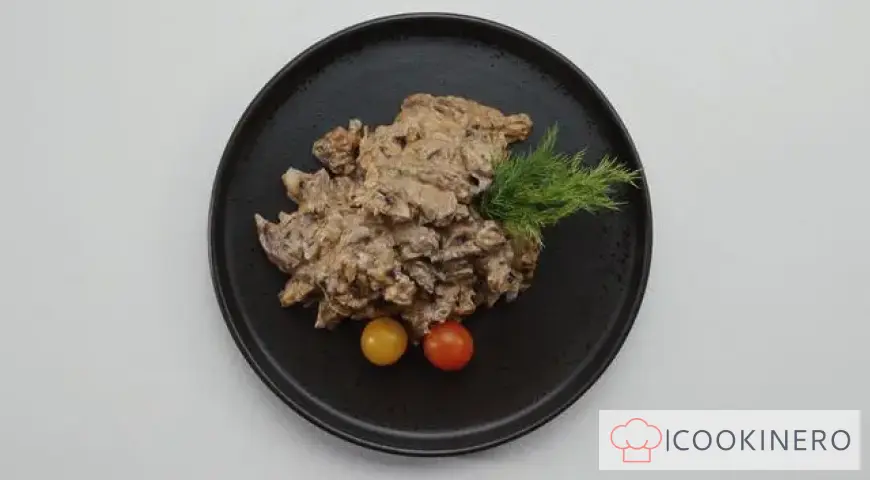
Beef Stroganoff with Mushrooms and Cream





Hetman's borscht

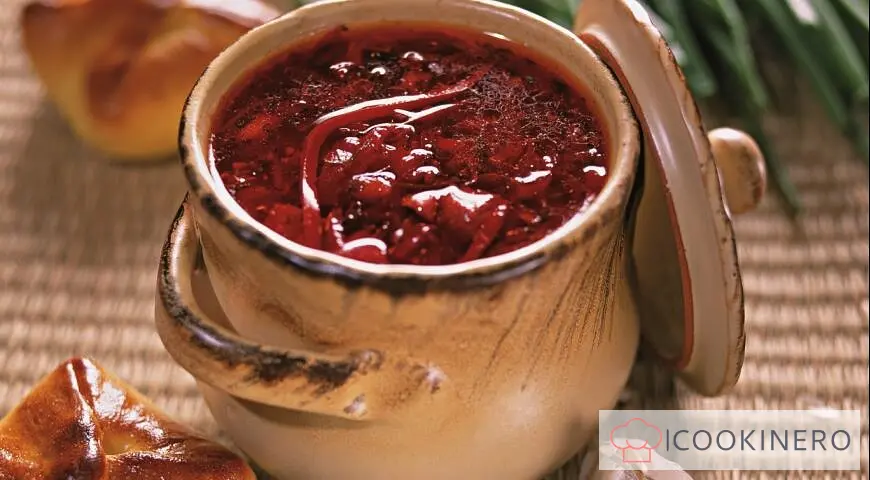
There are at least 25 officially recognized borscht recipes: Chernihiv, Hetman, Poltava; borscht green, cold; with prunes and beans... And you can eat borscht from dawn to dusk - although many prefer the opposite.
How to cook Hetman's borscht
Step 1
Peel vegetables. Cut the onion into cubes, carrots, beets, peppers, cabbage, eggplants and potatoes into large strips.
Step 2
Fry carrots in 2 tbsp. l. vegetable oil for 3 minutes, add the onion, fry for another 2 minutes.
Step 3
Add chopped tomato and tomato paste. Cook over low heat for 3 minutes, add the beets and cook for another 15 minutes.
Step 4
Boil the broth, put in it 4 tbsp. l. browned vegetables and cabbage. Cook under a lid over low heat for 7 minutes, add potatoes, and after 5 minutes. - eggplant.
Step 5
After another 5 min. put the remaining fried vegetables and beans, cook everything together over low heat for another 10 minutes. Cut the parsley root into small strips, chop the greens.
Step 6
Fry the root in the remaining vegetable oil and add it to the borsch along with the greens. Remove from heat, season with lard, crushed in a mortar with garlic, cover and let it brew for 15-20 minutes.
Reviews: 0
0 Overall ratingHave you already prepared this recipe? Tell what you think.
Write a review
Trending

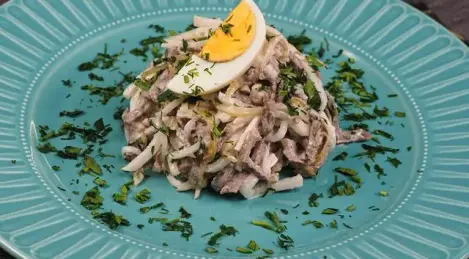
Tashkent Salad with Radish
The recipe for a salad with radish and beef is called "Tashkent". The root vegetable is popular in Uzbekistan. It is used to make a variety of salads, appetizers and even lagman. The Tashkent salad is an excellent option for a simple and he

Hearty sandwich with Vienna sausages
We tell you how to make an unusual and very filling filling for a sandwich. We used Viennese sausages as a basis. They are the best choice, as they do not have much fat. And to complete the taste, we added a boiled egg and lecho. All that remains is


Funchoza with pork
Funchoza with pork is a Korean dish that is prepared very quickly from glass noodles with meat, vegetables, soy sauce and spices. Funchoza with pork is spicy and aromatic. The noodles become transparent during cooking and absorb not only the taste an