 English
 Deutsch
 español
 français
 italiano

-
Newest

Light salmon roll
Omelette with cherry tomatoes and cheese
Rice sponge cake
Spaghetti with shrimps in creamy garlic sauce
Cabbage with champignons
Beef Stroganoff with Mushrooms and Cream


Japanese Mochi Cakes

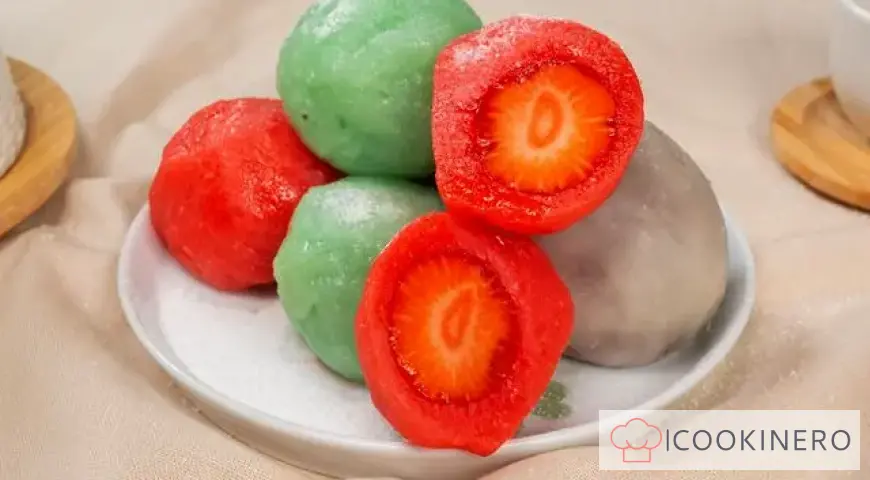
The first records of this dish appeared in the 8th century. At that time, "Mochi" was considered a dessert for wealthy people, because a special type of rice was needed to prepare it, which, compared to the usual one, was grown much less often. It is also interesting that "Mochi" was also attributed with healing properties. The fact is that strong teeth were highly valued in Japan and it was believed that a person's overall health depended on their condition. To strengthen teeth, "Mochi" was dried so that the cakes became hard, and eaten in this state.
How to cook Japanese Mochi Cakes
Step 1
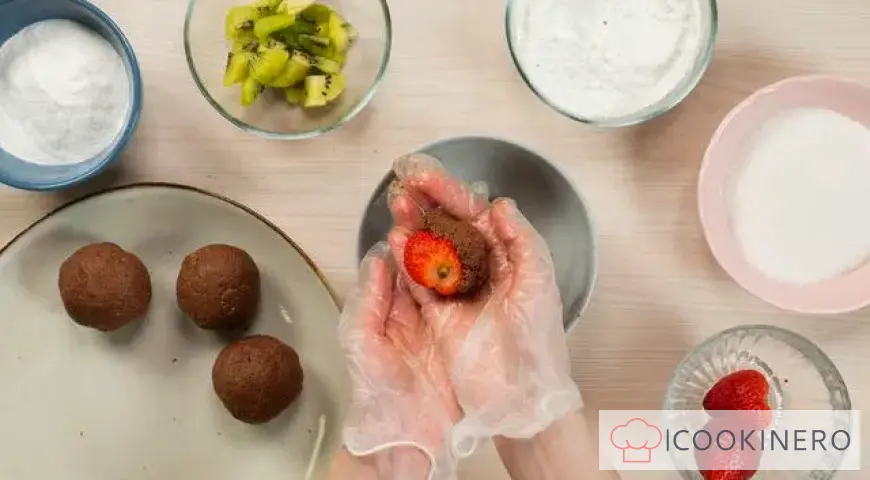
Prepare 3 types of filling. For the first filling, crumble the cookies, mix with chocolate-hazelnut paste and mold into balls with a strawberry in the center. For this filling, use half of all the berries. The second filling is the remaining half of the strawberries. For this, you will also need whole berries. The third filling is sliced kiwi.
Step 2

Make the dough. Add sugar, rice flour and water to a bowl, mix until smooth and microwave for 3-5 minutes.
Step 3

Prepare the cakes. Sprinkle a baking sheet, table, or other surface where you will place the finished mochi, with cornstarch. Take the dough and tear off a piece. You should get even pieces for each cake. Remember in your hands, forming a small flat cake, put the filling and fold the edges of the dough, forming a ball.
Japanese Mochi Cakes - FAQ About Ingredients, Baking Time and Storage
Reviews: 0
0 Overall ratingHave you already prepared this recipe? Tell what you think.
Write a review
Trending
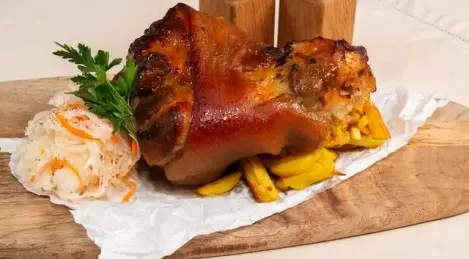
Czech style pork knuckle
The recipe for pork knuckle, or as they say in the Czech Republic, "veprova knelna", involves stewing the meat in beer for quite a long time and then baking it in the oven. Czech pork knuckle is juicy and tender baked meat with a unique aro
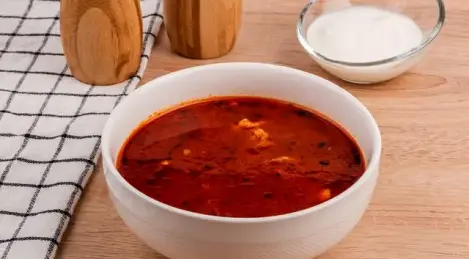
Georgian Solyanka
Georgian meat solyanka differs from the classic recipe that is usually prepared in Russia. In Georgia, this is a fragrant and spicy hot dish based on beef, pickles, vegetables and spices. If desired, this solyanka can be made thick or thin. Its consi
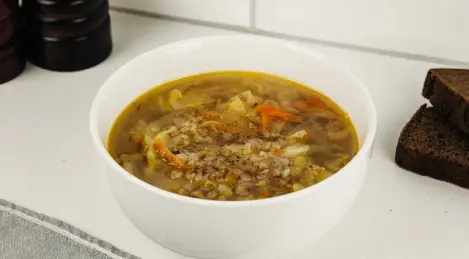
Buckwheat soup
Cabbage soup with potatoes is a traditional Russian dish. It can often be seen in various establishments in one interpretation or another. Many people also cook it at home, because it is a simple, budget-friendly and tasty soup.